

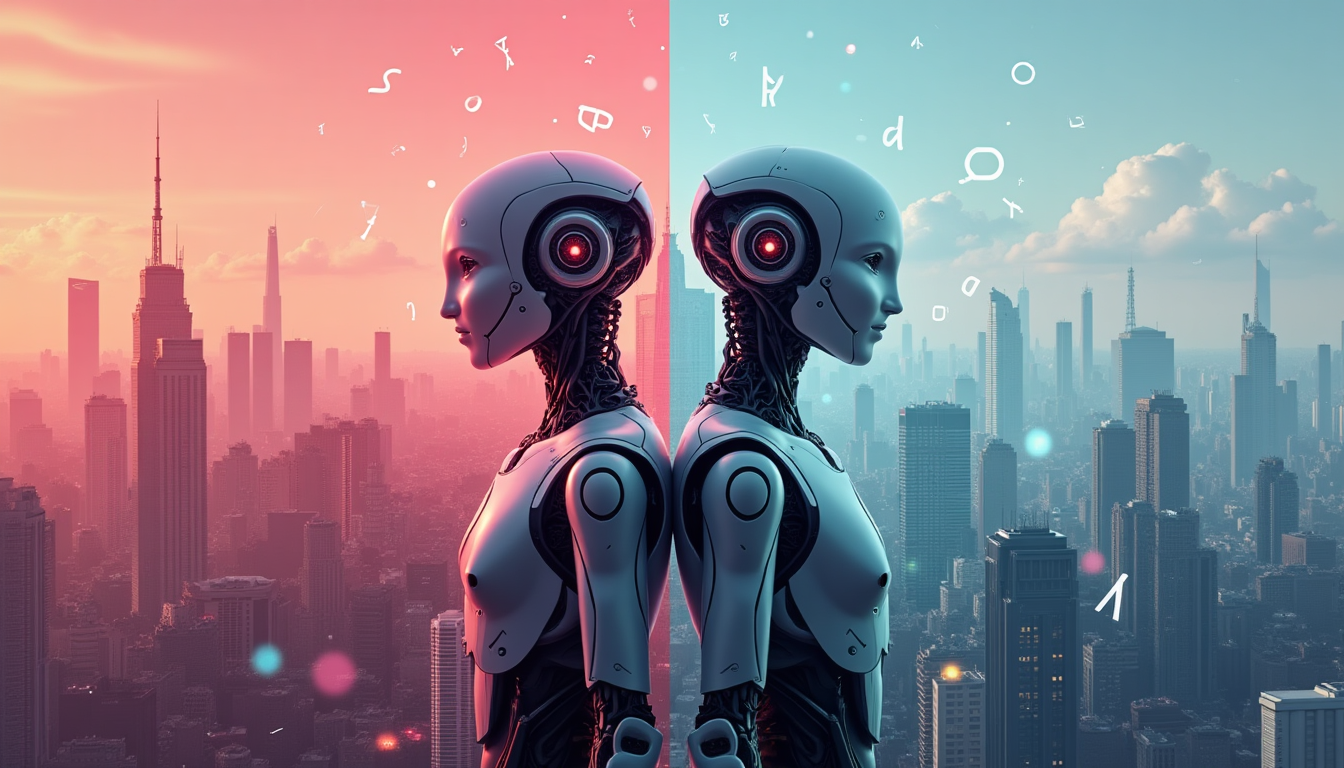
Understanding AI Agents: The Mathematical Foundations Behind Artificial Intelligence
Get ready to dive into the thrilling world of Artificial Intelligence (AI) agents, the brainy systems that are here to tackle tasks that usually require a human’s smarts—think problem-solving, decision-making, and learning. But what makes these genius agents tick? Spoiler alert: it’s all about the math! Understanding the mathematical foundations that power AI is key for anyone who wants a peek behind the digital curtain and see how this tech wizardry evolves.
So, let’s get those math hats on, folks!
Algorithms: The Secret Sauce of AI Agents
Picture algorithms as the wise magicians behind the curtains, conjuring order from chaos. They offer step-by-step guides for AI agents, ensuring everything runs smoother than your morning coffee! From machine learning and neural networks to decision trees, algorithms are loaded with robust mathematical principles. Without math, AI would be like a cat trying to solve a Rubik’s Cube—adorable but ultimately ineffective. By leveraging advanced math techniques, AI agents can sift through mountains of data and uncover insights that help them strut their stuff with enhanced performance and accuracy.
Let’s face it, algorithms are the real MVPs in the AI game!
Who Says AI Can Do It All? Busting Myths About AI Math
Now, let’s clear the air because there’s a common myth floating around: that AI can whip up complex calculations and predictions with human-like prowess, like a robot Einstein. The reality? While AI does use mathematical models like a pro, its effectiveness hinges on the quality and complexity of that math—kind of like how a great chef needs fresh ingredients to whip up a tasty dish! Misunderstanding the math behind AI can lead to inflated expectations, so let’s not kid ourselves; we need to keep our feet on the ground while dreaming big about AI!
The Mathematical Models of Dodgeball: Limits of AI
Sure, AI has made some impressive leaps, but let’s not pretend it doesn’t have its struggles. Many mathematical models still have a hard time with intricate problems, especially when the going gets tough and the environment gets unpredictable. Think of it like trying to play dodgeball with your eyes closed—inevitably, there will be some whacks to the face! This limitation can lead to inaccurate outputs, causing doubts about AI reliability in areas like healthcare and finance. Time to recognize those pesky boundaries; they’re important for both developers and users.
Oops! AI Math Mistakes: The Case Studies
Let’s take a stroll down memory lane and look at some hilarious (well, not so funny for those involved) instances where AI math took a nosedive. Picture AI systems goofing up financial forecasts or misreading user sentiments on social media—yikes! These blunders highlight the challenges and inaccuracies that can happen when AI agents aren’t backed by solid mathematical methods. Talk about a classic “Uh-oh!”
When Human Emotion Confuses AI: The Complexity of Us
Ah, human behavior and emotions—an intricately tangled web even a master mathematician would struggle to unravel. Unlike the straightforward lines of a linear equation, human interactions are nuanced and complex, making it super tricky for AI to fully grasp or predict outcomes. This juiciness emphasizes the need for ongoing research—because we all know deadpan math just can’t capture the chaos of a crowded Starbucks on Monday morning!
The Future of AI Math: It’s Getting an Upgrade!
Fear not, math enthusiasts! The quest to improve AI mathematics is well underway. Researchers are cooking up fresh ideas to amp up AI capabilities, with deep learning and quantum computing leading the charge into the future. By merging theoretical math with real-world applications, we can create AI agents that are sharper than a tack and ready to face complex challenges head-on!
Let’s Chat Ethics: Flawed AI Math
But beware! Deploying AI on shaky mathematical foundations raises some hefty ethical concerns. Mistakes can snowball into unintended consequences, impacting individuals, businesses, and entire societies—yikes! It’s crucial for developers to stay vigilant and prioritize ethical considerations while weaving their AI magic.
In Conclusion: Embracing the Math Behind AI
Understanding the mathematical limitations of AI agents isn’t just important; it’s essential for engaging meaningfully with this rapidly advancing technology. As AI continues to weave itself into different industries, a balanced view of its strengths—and its weaknesses—is key. With research and critical thinking leading the way, we can usher in a new era of effective and ethically sound AI systems. After all, with great power (and algorithms) comes great responsibility!
By spotlighting the significance of AI agents and their mathematical foundation, we aim to bust myths, shine light on limitations, and promote a responsible approach to this ever-evolving field!
About the Author